
◆
Fuels the electron transport chain — the core process your mitochondria use to convert food into usable cellular energy.
Dose ranges reflect commonly studied amounts in published research models. This is not medical advice. For research use only. Not for human consumption.
Protocol Comparison
Longevity
Research dose range
Standard research range
50 - 100 mg
The dose independent clinics and protocols keep landing on — not the average of a range, the range itself.
Research focus
Cellular energy metabolism
Observed window
2-3x/Loading protocols commonly run several weeks
Administration
2-3x/week
Primary pathway
Sirtuins (SIRT1) / PARP enzymes / Mitochondrial ATP production
Dosing compiled from clinical-practice protocols for subcutaneous and intramuscular NAD+ administration. For research use only.
MANFAAT PROTOKOL
◆
Fuels the electron transport chain — the core process your mitochondria use to convert food into usable cellular energy.
◆
A required substrate for sirtuins and PARP enzymes — the proteins driving DNA repair and cellular stress response, not just an energy molecule.
◆
Declines with age as CD38, a NAD+-consuming enzyme, becomes more active — replenishment addresses that decline mechanism directly rather than working around it.
SAINS
NAD+ is a coenzyme present in every living cell, shuttling electrons between metabolic reactions to keep the mitochondrial energy cycle running. It's also a required substrate for two entirely separate systems — the sirtuins that regulate aging and stress response, and the PARP enzymes that handle DNA repair. One molecule, three jobs.
NAD+'s role in energy metabolism, DNA repair, and sirtuin signaling isn't up for debate — it's foundational cell biology, not a new claim.
YANG DIHARAPKAN
Energy-related effects are commonly reported within days of starting a loading protocol. The deeper cellular work — DNA repair, sirtuin activation — builds progressively over several weeks of consistent use.
CATATAN PROTOKOL
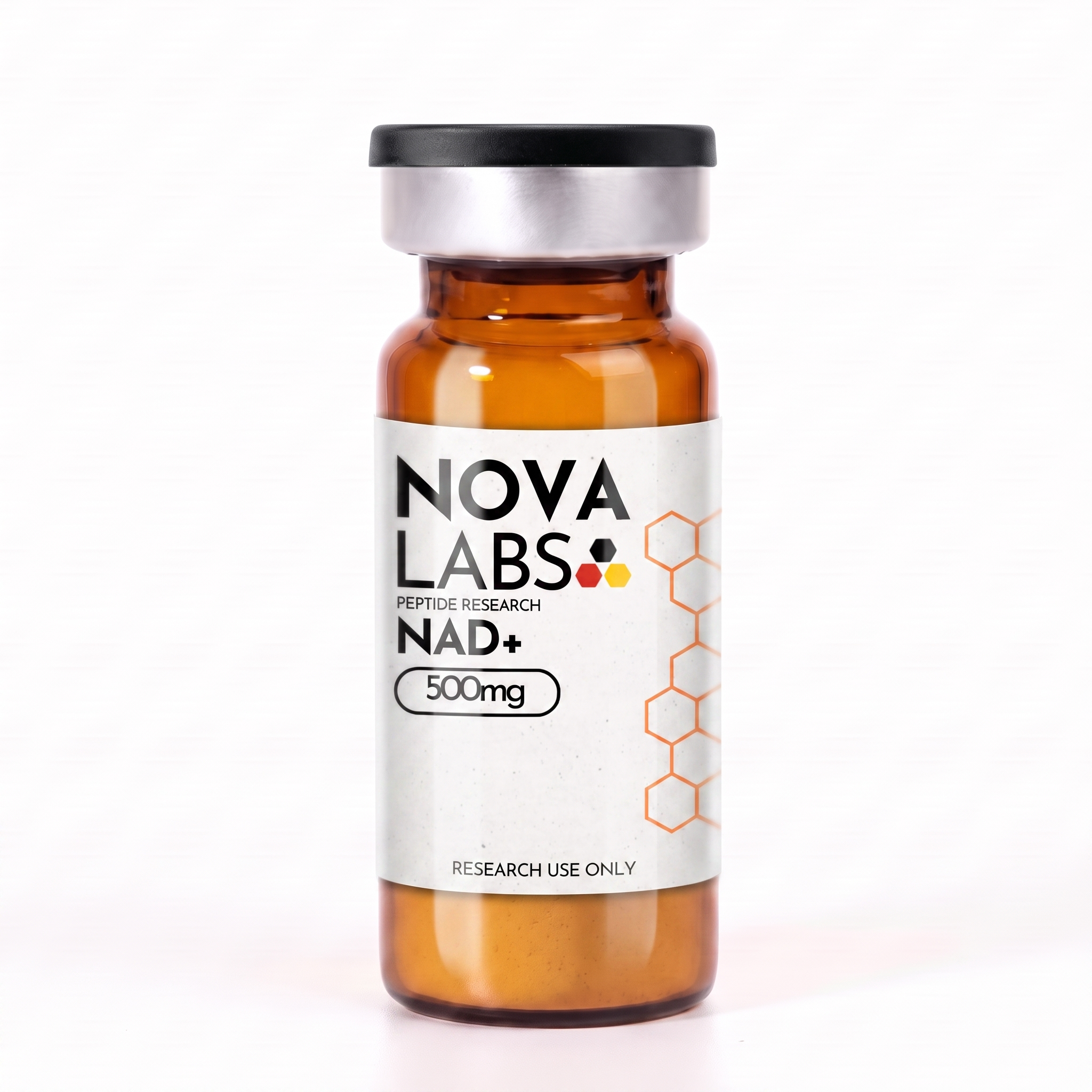
Available in 500mg. For research use only. Full documentation included with every order.
FAQ
Injectable delivery bypasses the gut entirely, sending NAD+ straight into circulation — a more direct route than oral forms, which lose most of their potency to digestive breakdown.
Subcutaneous delivers a slower, steadier release and is the more common self-administration route. Intramuscular allows larger doses with faster absorption but typically requires professional administration.