
SKIN & HAIRMay 18, 2026
GHK-Cu and the Biology of Skin Repair
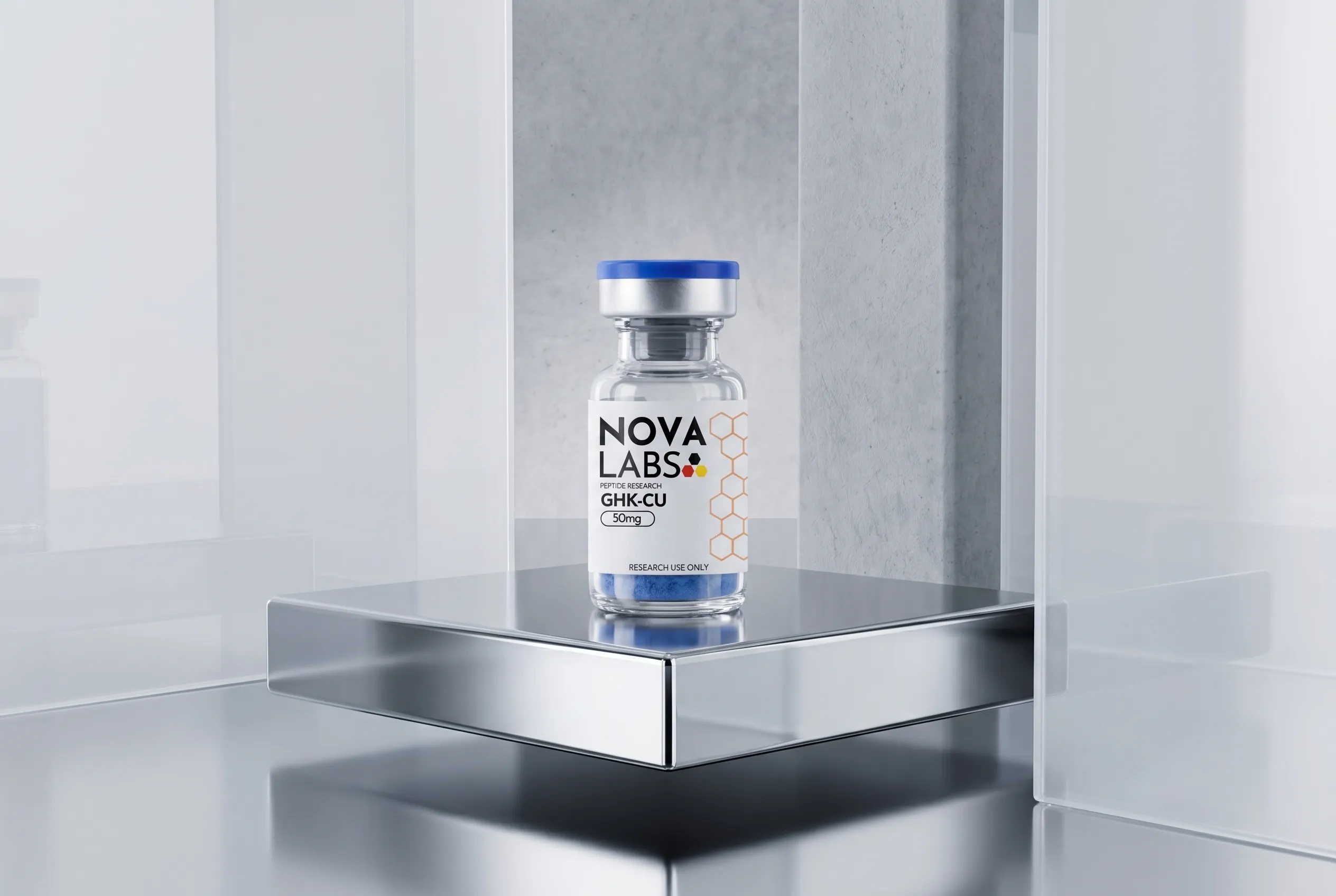
Short description: Explains copper peptides, collagen signaling, tissue repair, oxidative stress, and why GHK-Cu is associated with skin and hair health.
GHK-Cu is a copper peptide naturally found in the human body. It is studied for its relationship to collagen production, tissue repair, skin quality, wound healing, and oxidative stress modulation. As people age, natural levels of GHK-Cu decline, which is one reason it has become a major topic in skin and hair optimization.
Skin aging is not only a surface problem. Fine lines, loss of firmness, slower healing, and reduced elasticity are connected to deeper changes in collagen, elastin, inflammation, oxidative stress, and cellular repair. GHK-Cu is interesting because it is researched through pathways that touch several of those systems at once. It is not simply a cosmetic ingredient. It is a biological signal associated with repair.
Collagen signaling is one of the most important areas. Collagen provides structure, firmness, and resilience. When collagen production slows or damage outpaces repair, skin quality declines. GHK-Cu is studied for its ability to support collagen and elastin-related activity, which makes it relevant to protocols focused on skin texture, firmness, and recovery.
The copper component also matters. Copper is involved in several enzymatic processes related to tissue repair and antioxidant defense. In peptide form, GHK-Cu appears to function as a signaling molecule that helps coordinate repair behavior rather than simply delivering a mineral.
GHK-Cu is also discussed in hair protocols because healthy follicles depend on blood flow, tissue quality, and signaling in the surrounding environment. While it should not be oversold as a guaranteed hair-growth solution, it has a logical place in protocols focused on scalp and follicle health.
The best way to understand GHK-Cu is as a regenerative signal. It fits users who care about skin quality, tissue repair, and biological aging at the visible surface. As with any protocol, quality verification and realistic timelines matter.