
◆
Associated in early human studies with promotion of slow-wave (delta) sleep and increased sleep pressure following administration.
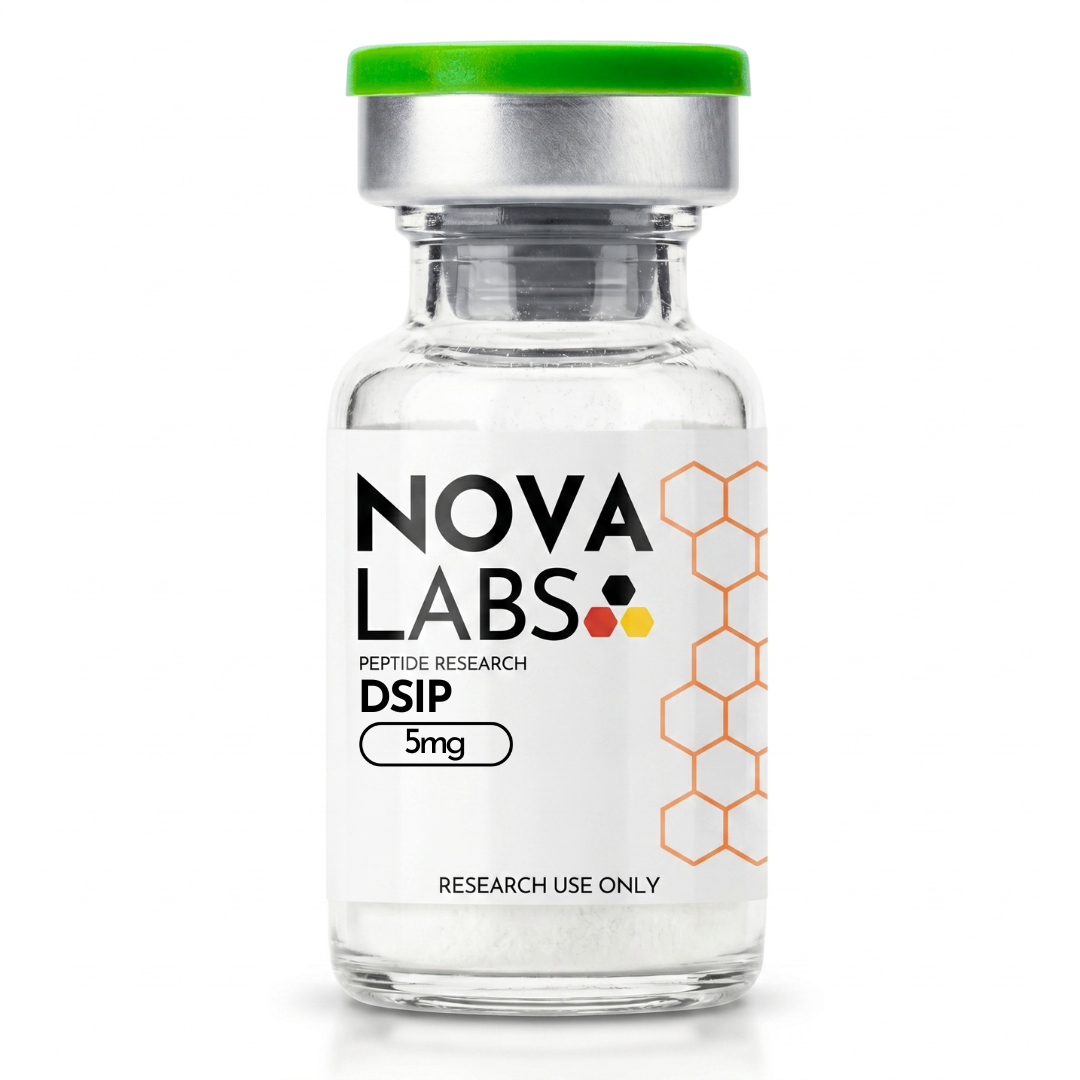
Dose ranges reflect commonly studied amounts in published research models. This is not medical advice. For research use only. Not for human consumption.
Protocol Comparison
Recovery
Research dose range
Standard research range
150 - 250 mcg
Approximates the ~25nmol/kg dose (≈150-250mcg) used in early human sleep studies (Schneider-Helmert & Schoenenberger).
Research focus
Delta sleep / stress modulation
Observed window
Onset within the ~15-min half-life window
Administration
30-60 min before sleep
Primary pathway
CRF / stress axis / melatonin modulation
Dosing compiled from early human pharmacology studies and subsequent literature reviews (Graf & Kastin, Neurosci Biobehav Rev, 1986). Mechanism not fully characterized. For research use only.
MANFAAT PROTOKOL
◆
Associated in early human studies with promotion of slow-wave (delta) sleep and increased sleep pressure following administration.
◆
Sits at the crossroads of the stress and sleep systems, tied to corticotropin-releasing factor signaling and the body's wind-down response.
◆
Shows up in early studies influencing pituitary hormone release, including growth hormone and LH, alongside its sleep effects.
SAINS
DSIP was discovered in 1974 in the cerebral blood of rabbits mid-sleep — a peptide the brain releases on its own, concentrated in the hypothalamus, limbic system, and pituitary. Give it experimentally, and it produces the exact spindle-and-delta EEG signature of deep, slow-wave sleep.
Despite five decades of research, DSIP's exact receptor target and signaling pathway remain unmapped — this is an open question in the literature, not a settled mechanism. Proposed pathways include melatonin modulation and suppression of CRF-driven stress signaling, neither of which has been definitively confirmed.
YANG DIHARAPKAN
DSIP clears the body fast — around a 15-minute half-life. Early studies saw faster sleep onset and longer stretches of slow-wave sleep when it was given 30-60 minutes before bed.
CATATAN PROTOKOL
Available in 5mg. For research use only. Full documentation included with every order.
FAQ
It's one of the few peptides where the effect was documented decades before the mechanism — researchers have observed what DSIP does to sleep architecture without ever pinning down the receptor responsible
Human studies have used subcutaneous administration approximately 30-60 minutes before intended sleep onset.