
◆
GHK-Cu drives collagen synthesis and extracellular matrix remodeling — the dominant compound in this blend by mass, and the one that governs cycle length.
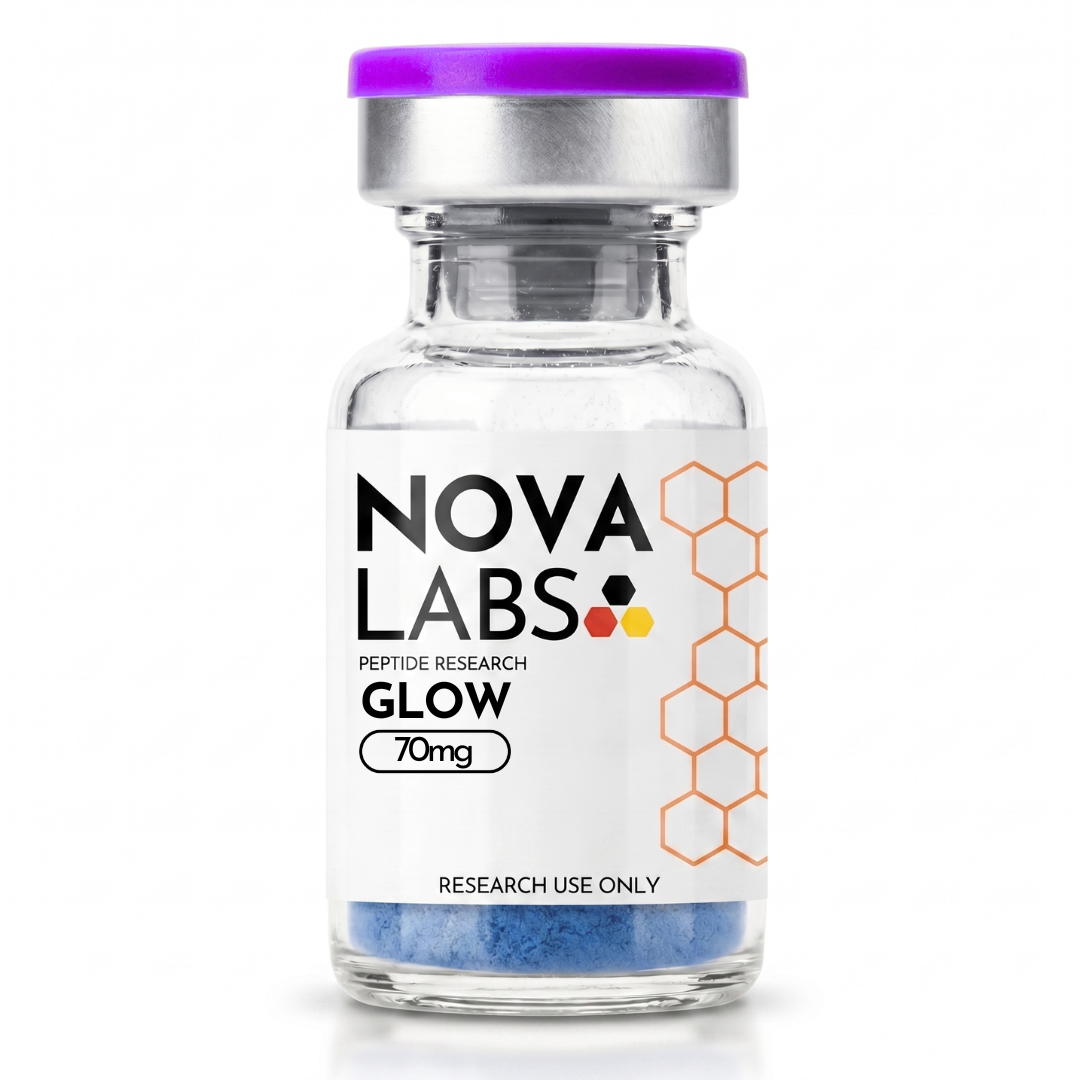
Dose ranges reflect commonly studied amounts in published research models. This is not medical advice. For research use only. Not for human consumption.
Protocol Comparison
Skin & Hair
Research dose range
Standard research range
2 - 3 mg
The most commonly documented daily dose — GHK-Cu and BPC-157 both land within their own solo ranges at this level.
Research focus
Skin remodeling + local/systemic tissue repair
Observed window
BPC-157 effects often noticed by week 2; GHK-Cu skin changes by weeks 3-4
Administration
Daily
Primary pathway
Collagen/ECM remodeling (GHK-Cu), VEGF/Angiogenesis (BPC-157), G-actin sequestration (TB-500)
Three mechanisms, three real research trails: Pickart & Margolina (2018) on GHK-Cu's regenerative signaling, Vasireddi et al. and Lee & Burgess (2025) on BPC-157's repair profile, Grant et al. (1999) on TB-500's angiogenic reach. The 5:1:1 ratio bringing them together in one vial. For research use only.
MANFAAT PROTOKOL
◆
GHK-Cu drives collagen synthesis and extracellular matrix remodeling — the dominant compound in this blend by mass, and the one that governs cycle length.
◆
BPC-157 supports new blood vessel growth right at the site of injury, while TB-500 helps repair cells migrate to where they're needed.
◆
The 5:1:1 ratio isn't arbitrary — it's built so each compound's effective dose lands together in a single injection, balancing GHK-Cu's higher-mass requirement against BPC-157 and TB-500's lower thresholds.
SAINS
GLOW combines three peptides targeting different layers of the same biology. GHK-Cu, the dominant compound by mass, drives collagen, elastin, and copper-dependent tissue remodeling. BPC-157 supports local angiogenesis and repair; TB-500 helps cells migrate toward damaged tissue systemically.
The 5:1:1 ratio is intentional — GHK-Cu is effective at higher absolute doses, while BPC-157 and TB-500 work at smaller amounts, so the blend is weighted to bring each into range at once. That holds cleanly for GHK-Cu and reasonably for BPC-157. TB-500 still lands below where its own solo protocols typically start — the tradeoff for one injection instead of three.
YANG DIHARAPKAN
Typically by week 2. Skin quality changes from GHK-Cu tend to follow around weeks 3-4. This runs as a cycle, not continuously — 4-8 weeks on, matched by time off; GHK-Cu's copper handling generally sets the ceiling on cycle length.
CATATAN PROTOKOL
50mg GHK-Cu + 10mg BPC-157 + 10mg TB-500 per vial (5:1:1 ratio). For research use only. Full documentation included with every order.
FAQ
Same three-peptide base — GHK-Cu, BPC-157, TB-500 — without KPV, the dedicated anti-inflammatory layer KLOW adds.
Mostly — GHK-Cu and BPC-157 land close to their own solo ranges. TB-500 doesn't; see the note below the dose table.