
◆
Sequesters G-actin to keep cells primed and mobile — accelerating their migration toward damaged tissue anywhere in the body.
Dose ranges reflect commonly studied amounts in published research models. This is not medical advice. For research use only. Not for human consumption.
Protocol Comparison
Recovery
Research dose range
Standard research range
2 - 4 mg
Active recovery — where most protocols live, supporting the body's everyday repair demands.
Research focus
Systemic tissue repair
Observed window
4-8 weeks
Administration
Twice weekly
Primary pathway
G-actin sequestration, VEGF, ILK/Akt signaling
Mechanism reference: Grant et al., Angiogenesis, 1999. Dosing compiled from community loading/maintenance protocols. For research use only.
MANFAAT PROTOKOL
◆
Sequesters G-actin to keep cells primed and mobile — accelerating their migration toward damaged tissue anywhere in the body.
◆
Upregulates VEGF significantly, supporting new blood vessel growth in areas that need it most.
◆
Activates the ILK/Akt signaling pathway, tied to cell survival and reduced tissue death after injury.
SAINS
TB-500 is the working fragment of Thymosin Beta-4 — the exact active sequence, isolated from the full protein. Where BPC-157 works locally, TB-500 works at a distance: sequestering G-actin keeps cells in a migratory, mobile state, letting them travel toward damage wherever it is in the body.
It's precision by design — the fragment carries the signal without the extra length the body doesn't need for this specific job, delivering the same actin-binding activity the parent protein is known for.
YANG DIHARAPKAN
Systemic repair builds gradually as the body's migration and angiogenesis pathways respond — most protocols track meaningful change over 4-8 weeks of consistent use.
CATATAN PROTOKOL
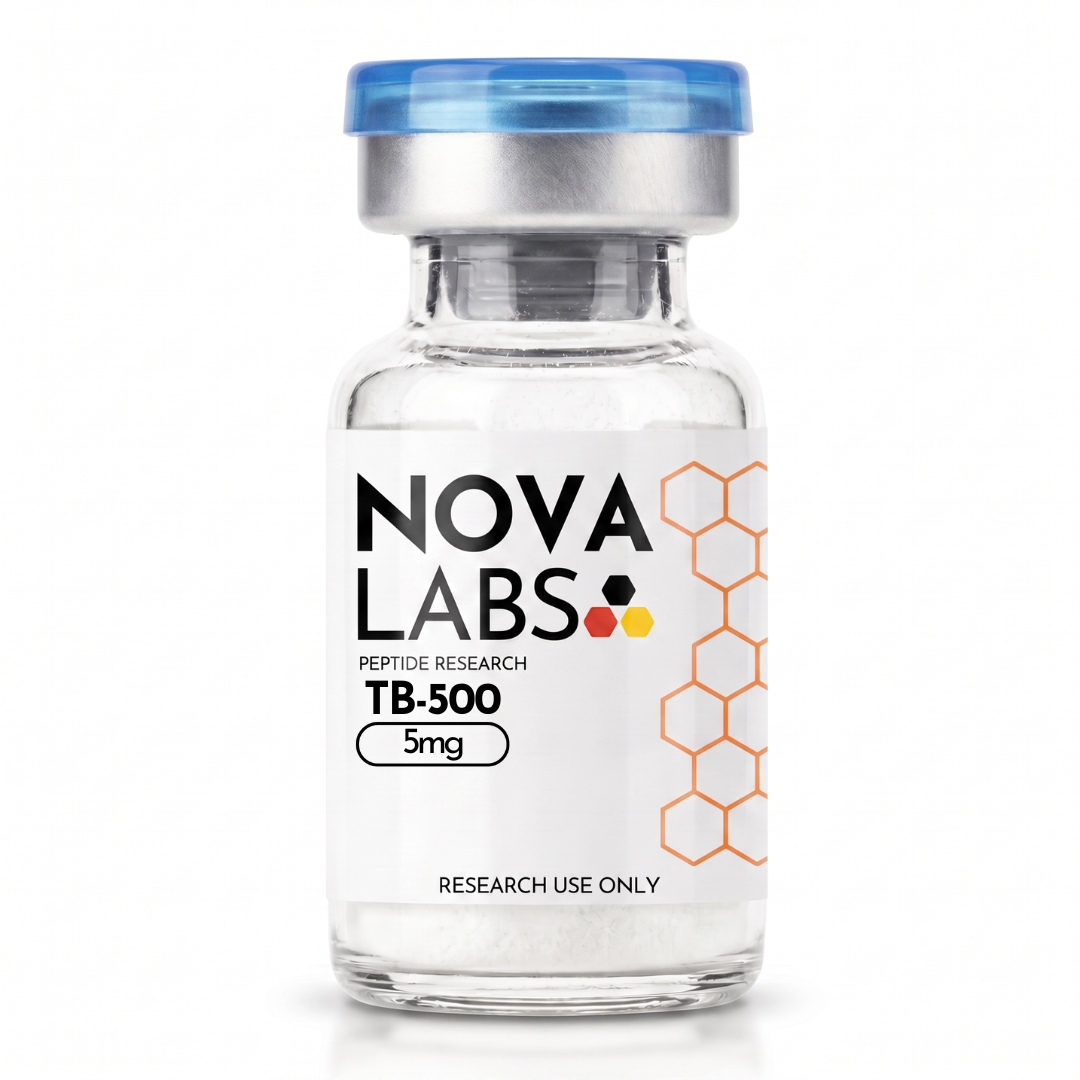
Available in 5mg. For research use only. Full documentation included with every order.
FAQ
BPC-157 acts locally, right at the site of injury. TB-500 works systemically — sequestering G-actin to keep cells mobile and primed to migrate toward damage anywhere in the body.
The fragment carries the exact active sequence responsible for actin binding — precision engineering that delivers the signal without the extra length.